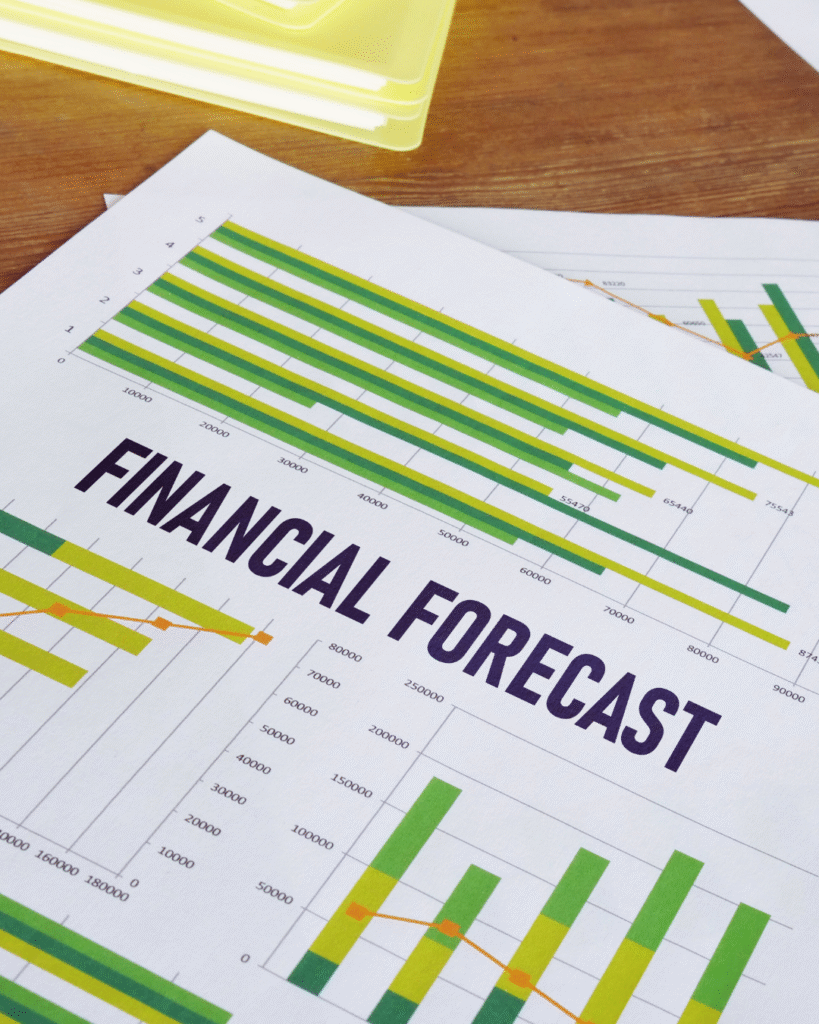
Financial forecasting is a critical practice for startups seeking to navigate uncertainty and plan for sustainable growth. It allows entrepreneurs to estimate future revenues, expenses, and cash flow, helping them make informed decisions and avoid common financial pitfalls.
Accurate financial forecasting gives startups a roadmap to manage resources effectively and attract investors by demonstrating a clear understanding of their financial health. Without this foresight, startups risk running out of funds or missing key opportunities for scaling their business.
By integrating financial forecasting into their strategy, startups can set realistic goals and adjust quickly to market changes. This proactive approach is essential for long-term success in a competitive environment.
Why Financial Forecasting Is Critical for Startups
Financial forecasting offers startups a clear roadmap for managing resources and adjusting strategies based on projected financial outcomes. It enables startups to anticipate challenges, seize opportunities, and maintain a stable trajectory.
Driving Informed Decisions and Strategic Planning
Financial forecasting equips startups with data-driven insights essential for making informed decisions. By projecting revenues, expenses, and cash flow, startups can allocate resources efficiently, avoid unnecessary spending, and prioritize initiatives that offer the highest returns.
Strategic planning is strengthened when startups understand their future financial position. Forecasts reveal when the company might face cash shortfalls or growth spurts, allowing founders to adjust marketing, hiring, or product development plans accordingly. This proactive approach reduces risks and increases the chance of startup success.
Building Investor Confidence and Securing Funding
Investors demand clear evidence of a startup’s potential for growth and profitability before committing funds. Detailed startup financial forecasting demonstrates a founder’s understanding of the market and business model.
A well-prepared forecast includes revenue projections, expense assumptions, and profitability timelines, which help investors assess the startup’s viability. This transparency plays a critical role in gaining investor trust and securing necessary funding to fuel development and expansion.
Supporting Sustainable Growth and Stability
Financial forecasting helps startups maintain financial stability by monitoring cash flow and preparing for contingencies. It identifies potential periods of financial strain, allowing for early corrective actions such as cost control or seeking additional capital.
Sustainable growth depends on balancing ambition with practical financial limits. Forecasting keeps startups focused on realistic milestones and ensures that scaling efforts do not outpace available resources, promoting long-term viability in a competitive market.
Key Components of Effective Financial Forecasting
Effective financial forecasting requires detailed insight into income, costs, cash flow, and future possibilities. Accurate predictions rely on data like historical trends and unit economics, helping startups allocate resources and anticipate challenges.
Revenue Forecasting and Revenue Projections
Revenue forecasting involves estimating future sales based on historical data, market trends, and customer acquisition costs. Accurate revenue projections consider the startup’s average revenue per user (ARPU) and annual recurring revenue (ARR) to model predictable income streams.
Startups often segment revenue by product lines or customer segments to identify growth opportunities. Using a combination of top-down (market size) and bottom-up (sales funnel metrics) approaches enhances the accuracy of revenue forecasts.
Revenue projections should be updated regularly by comparing actuals to predictions, allowing adjustments to strategies like pricing or marketing spend.
Expense Forecasting: Fixed and Variable Costs
Expense forecasting separates costs into fixed and variable categories. Fixed costs, such as rent, salaries, and insurance, remain constant regardless of business volume. Variable costs, like materials, shipping, and commissions, fluctuate with sales or production levels.
Startups must estimate operational costs aligned with expected activity. This helps ensure the business can cover fixed overheads while scaling variable costs appropriately.
Understanding unit economics — the cost per customer acquisition versus revenue generated — is vital to maintain profitability. Forecasts should track fixed and variable components to avoid underestimating expenses.
Cash Flow Forecasting and Management
Cash flow forecasting predicts when cash enters and leaves the business over a given period. Startups use cash flow statements to monitor liquidity and avoid shortfalls.
Effective cash flow management involves aligning receivables and payables, preventing gaps that can disrupt operations. Forecasts incorporate payment terms, sales cycles, and capital expenses.
Proactive cash flow analysis helps startups plan for funding needs or investment timing. Regularly updating cash forecasts reduces financial risk and supports steady growth.
Balance Sheet and Scenario Planning
Balance sheet forecasting projects assets, liabilities, and equity changes resulting from operations and financing activities. It reflects the startup’s financial health, including cash balances, debts, and shareholder equity.
Scenario planning examines best-case, worst-case, and most-likely financial outcomes. This approach helps startups prepare for market shifts, funding delays, or cost overruns by stress-testing financial projections.
Incorporating scenario planning into forecasts enables informed decision-making under uncertainty, ensuring the startup remains resilient across varying conditions.
Data, Assumptions, and Techniques for Startup Financial Forecasting
Accurate forecasting relies on carefully selected data sources, well-founded assumptions, and relevant techniques. A startup must analyze past trends, use realistic projections, and integrate market insights to create actionable financial models.
Analyzing Historical Data and Industry Benchmarks
Startups often lack extensive historical data, but any available accounting and bookkeeping records are vital for forecasting. This includes tracking cash flow, expenses, and revenue trends to identify patterns.
When internal data is limited, industry benchmarks provide critical reference points. Comparing key financial ratios such as gross margin, operating expense percentages, and customer acquisition costs with competitors helps set realistic targets.
Using sensitivity analysis here reveals how changes in assumptions affect outcomes. Regularly updating forecasts with new financial results ensures models stay accurate as the startup grows.
Making Realistic Assumptions
Financial forecasts depend on assumptions about sales growth, operating costs, and investment needs. These should be based on verifiable sources and conservative estimates to reduce risk.
Startups must incorporate expected customer behavior patterns, such as retention rates and purchase frequency. Accounting for seasonality or economic fluctuations can improve forecast reliability.
Documenting assumptions clearly enables ongoing adjustment when new data or market changes occur. Avoid overestimating revenue and underestimating expenses to prepare for contingencies.
Utilizing Market Research and Customer Insights
Market research delivers data on target demographics, competitor positioning, and pricing strategies essential for forecasting revenue streams accurately.
Customer insights like buying habits, preferences, and feedback help refine sales projections and marketing spend.
Startups should integrate these findings with financial models to align forecasts with actual market demand. Combining qualitative feedback with quantitative data strengthens prediction accuracy and supports funding discussions.
Optimizing Financial Forecasts for Strategic Decisions
Accurate financial forecasts guide startups in managing funds efficiently, anticipating risks, and measuring progress. They form the foundation for essential choices about spending, growth, and operational adjustments.
Resource Allocation and Budgeting
Startups rely on financial forecasts to allocate resources effectively across departments like marketing, hiring, and product development. By predicting customer acquisition costs and lifetime value, they can decide where to invest for the best returns.
Budgeting becomes more precise with these forecasts. For example, if projections show high customer lifetime value, more funds may go to marketing campaigns targeting long-term clients. Similarly, startups can adjust their hiring plan based on forecasted revenue streams, avoiding overstaffing or understaffing.
This strategic allocation reduces waste and maximizes impact, ensuring every dollar is spent with clear intent.
Avoiding Cash Flow Problems and Financial Risks
Forecasts highlight potential cash shortages before they occur, allowing startups to prepare or pivot quickly. This foresight helps prevent interruptions in operations caused by cash flow problems.
Identifying financial risks early enables companies to build contingency plans, such as securing lines of credit or delaying expenditures. Forecasting showcases when expenses may outpace income, triggering timely corrective actions.
Startups that monitor forecast accuracy regularly can reduce surprises. This vigilance is critical to maintaining financial health in uncertain markets.
Tracking Business Performance and Adapting
Financial forecasts serve as benchmarks for tracking actual performance against expected results. By comparing real revenue, costs, and profits to forecasts, startups identify areas needing adjustment.
If customer acquisition cost rises beyond projections or lifetime value declines, companies can refine marketing strategies or improve product offerings. Tracking hiring expenses compared to forecasted growth ensures workforce efficiency.
Regularly revising forecasts based on current data lets startups adapt strategies quickly, maintaining alignment with business goals in dynamic environments.